


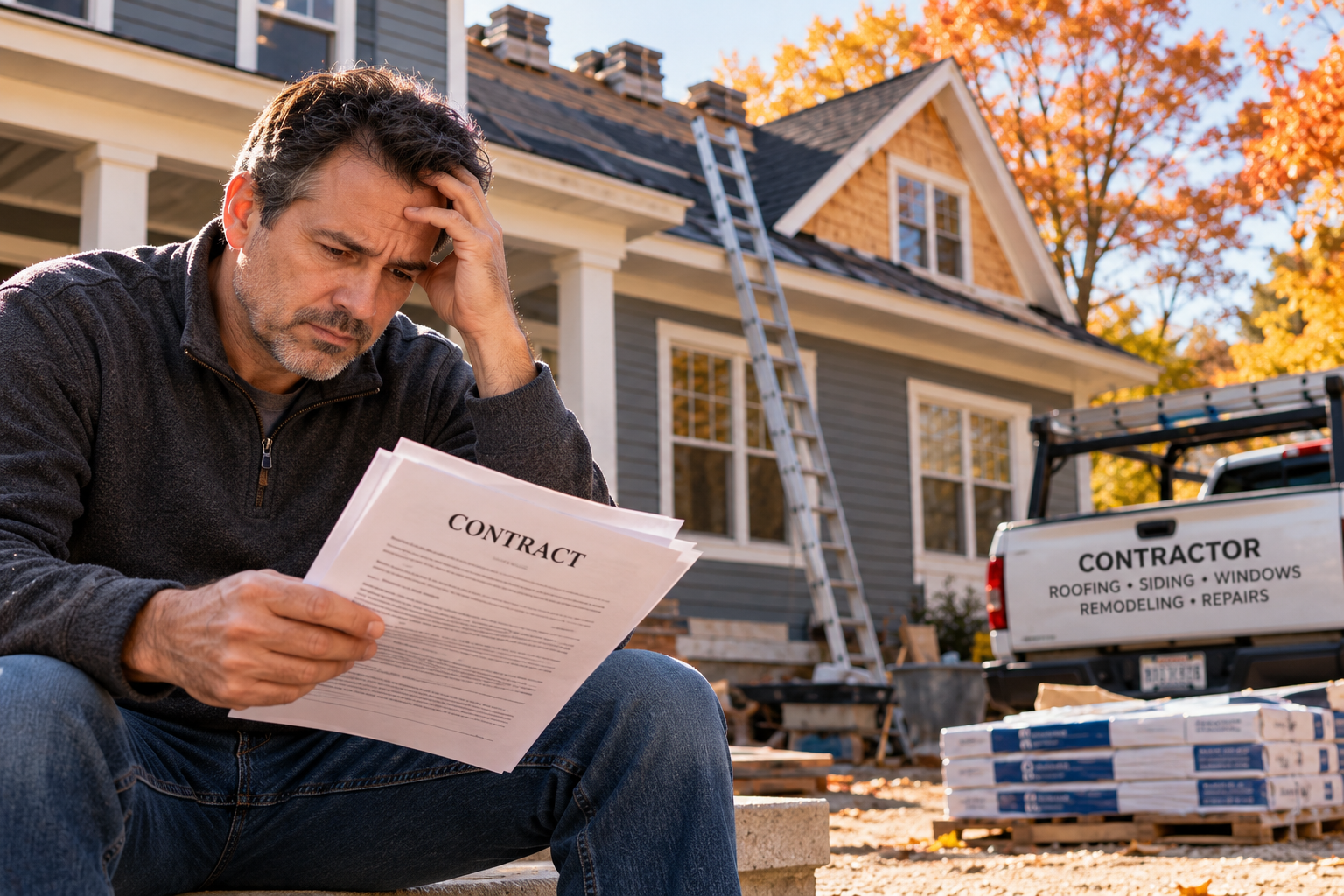

The Contractor Took Your Deposit. Winter Is Coming. Where Is the Work?
You hired a contractor to replace your roof, install new windows, or complete repairs before the colder weather arrives.
You signed an agreement, paid a deposit, and were told the work would begin within a few weeks.
But weeks have passed.
The contractor keeps postponing the start date. Your calls go unanswered. And the work you already paid for has barely started, if it has started at all.
Now you are left wondering whether you will ever get your money back.
For New York homeowners, contractor delays can become more than an inconvenience. They can leave a property exposed to damage, disrupt other projects, and create expensive legal disputes.
Paying a Deposit Does Not Mean You Have to Accept Endless Delays
Home improvement contractors often require deposits to purchase materials, schedule workers, or secure a project.
But accepting your money does not give a contractor unlimited time to complete the work.
In New York, covered home improvement contracts must be in writing and include important information, such as the work to be performed, payment terms, and approximate start and completion dates.
If a contractor repeatedly misses deadlines, the first step is to review what the agreement actually promises.
A delay does not automatically mean the contractor has broken the law or breached the contract. Weather, material shortages, and other legitimate circumstances can affect construction schedules.
However, repeated unexplained delays, abandoned work, or a refusal to communicate may indicate a more serious problem.
Carlos Gamboa
Excelente servicio. José es el mejor
What If the Contractor Stops Answering Your Calls?
A contractor who suddenly disappears after receiving payment creates an especially frustrating situation.
You may have already purchased materials, taken time off work, or arranged for other contractors to begin their portions of the project.
Before taking further action, gather your documentation.
Keep copies of your signed agreement, payment records, text messages, emails, photographs, and any promised completion dates.
If the contractor made verbal promises about when work would begin or finish, write down what was said and when.
These records may become important if you need to establish what the contractor agreed to do and whether those obligations were fulfilled.
Can You Get Your Deposit Back?
Possibly, but the answer depends on the circumstances.
If a contractor fails to perform the work required by the agreement, the homeowner may have grounds to seek the return of money paid or pursue other remedies.
The contract’s cancellation terms, the amount of work completed, materials purchased, and reasons for the delay can all affect the outcome.
New York also has consumer protection laws governing home improvement contracts, including rules concerning how certain advance payments must be handled.
However, homeowners should not assume that every missed deadline automatically entitles them to a full refund.
An attorney can review the agreement and circumstances to determine what remedies may be available.
What If the Contractor Started but Never Finished?
An unfinished project can be even more complicated than one that never began.
Imagine paying for a roof replacement only to have the old roofing removed and the new materials left sitting in your driveway.
Now the house may be vulnerable to rain, and another contractor might charge more to complete or correct the work.
Depending on the facts, a homeowner may be able to pursue damages related to the contractor’s failure to fulfill the agreement.
Those damages could potentially include the reasonable cost of completing or correcting the work, subject to applicable legal rules and the terms of the contract.
Before hiring someone else or making major changes to unfinished work, consider documenting the property’s condition and obtaining legal advice.
Warning Signs Homeowners Should Not Ignore
Not every delay means a contractor is acting improperly. But certain patterns deserve attention.
Be cautious when a contractor repeatedly demands additional payments without explaining why, refuses to provide written updates, changes the agreed scope of work without documentation, or continually promises to return without following through.
A contractor who refuses to provide a written agreement or meaningful payment records may also create unnecessary risks.
The earlier you recognize a potential problem, the more options you may have to protect your property and your investment.
What Should You Do Before the Situation Gets Worse?
If your contractor is not meeting their obligations, start by reviewing the contract and organizing your records.
Communicate your concerns in writing. Identify the work that remains incomplete and request a clear explanation and proposed completion schedule.
Avoid making additional payments simply because the contractor promises that everything will be finished soon.
If the situation cannot be resolved, legal assistance may help you evaluate whether the contractor breached the agreement and what steps you can take next.
Depending on the circumstances, those steps might include negotiating a resolution, pursuing repayment, or bringing a legal claim.
Do Not Let an Unfinished Project Become a Bigger Problem
Home improvements are expensive enough without having to worry about whether the contractor will finish the job.
When deadlines keep slipping and your money is already on the line, understanding your rights can help you make informed decisions before the situation becomes more costly.
At MontanaroLaw, we help New York property owners and businesses address contract disputes and protect their legal interests. If a contractor accepted your deposit but failed to complete the promised work, contact us today to discuss your situation and explore your legal options.
