


When to Use a Real Estate License Agreement Instead of a Lease
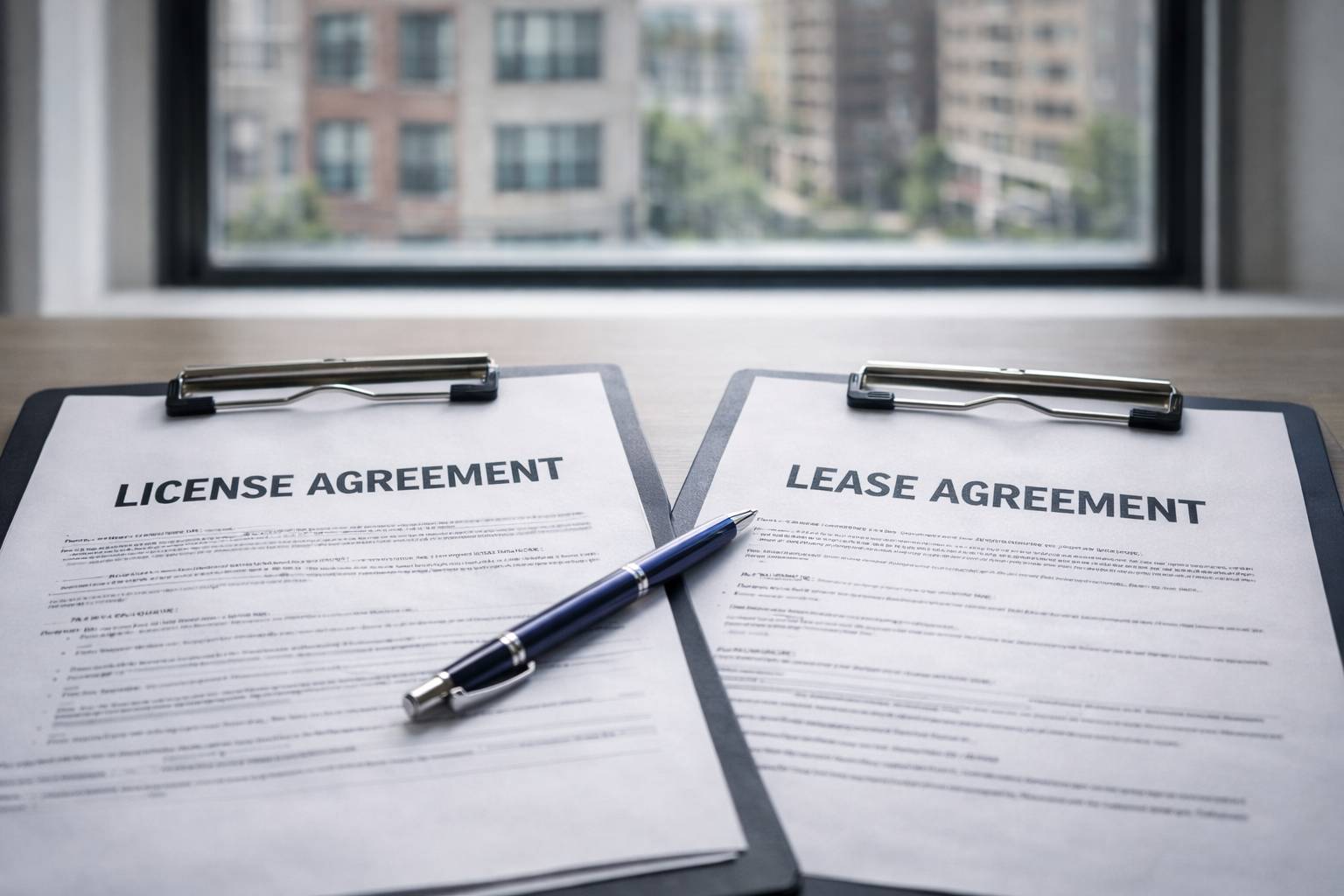
In real estate transactions, the legal relationship between a property owner and an occupant is not always created through a traditional lease. In certain situations, parties may choose to use a license agreement instead. While these two arrangements may appear similar on the surface, they carry very different legal consequences. Understanding when a license agreement may be appropriate and how it differs from a lease is essential for protecting property rights and avoiding unintended legal obligations.
Choosing the wrong form of agreement can lead to disputes over possession, control, and enforcement, making careful consideration critical in New York real estate transactions.
What Is a License Agreement in Real Estate Transactions
A license agreement is a legal arrangement that allows a person to use or occupy property for a specific purpose without granting any ownership or tenancy interest. Unlike a lease, a license does not convey an exclusive right to possess the property. Instead, it provides limited permission to use the space under defined conditions.
License agreements are commonly used for short term or specialized purposes, such as allowing access for storage, events, or temporary business operations. The property owner typically retains greater control over the premises than under a traditional lease.
Barbara Reiszel
Fast and friendly service. Thank you so much
License Agreement vs. Lease: Key Legal Differences
The primary distinction between a license agreement and a lease lies in the right of possession. A lease grants the tenant exclusive possession of the property for a defined period, while a license only permits use without transferring possession.
Leases generally create long term obligations and statutory protections for tenants. License agreements are more limited in scope and duration and usually offer fewer legal protections to the occupant. Courts often look beyond the label of the document to determine whether the agreement functions as a true lease or a license based on the rights granted.
Misclassifying an agreement can expose property owners to unexpected tenant rights and regulatory requirements.
When a License Agreement May Be Used Instead of a Lease
A license agreement may be appropriate when the intended use of the property is temporary, conditional, or closely controlled by the owner. Examples include granting permission to use part of a property for a specific activity, allowing short term occupancy while renovations are underway, or permitting access to land for a limited purpose.
License agreements are often used when the owner needs flexibility to revoke access or modify terms without triggering landlord tenant protections. They may also be used in commercial settings where possession is shared or heavily restricted.
Risks of Using a License Agreement in New York Real Estate Deals
Using a license agreement instead of a lease carries legal risks, especially in residential contexts. If the agreement grants exclusive possession or resembles a tenancy in practice, a court may treat it as a lease regardless of its title.
This can result in the occupant receiving tenant rights under New York law, including eviction protections and notice requirements. Property owners who rely on license agreements to avoid landlord tenant regulations may face legal challenges and enforcement actions.
Improper use of license agreements can also complicate financing, insurance coverage, and liability exposure.
How License Agreements Affect Property Rights and Control
License agreements generally allow property owners to retain greater control over how the space is used. Because possession is not transferred, the owner may retain access to the property and impose detailed conditions on use.
However, the more control an occupant exercises over the property, the more likely the agreement will be viewed as a lease. Clear limitations on use, duration, and exclusivity are essential to maintaining the legal character of a license agreement.
These agreements must be carefully drafted to reflect the intended relationship and avoid creating unintended property rights.
Common Disputes Arising From License Agreements
Disputes often arise when one party believes a license agreement has created a tenancy. Conflicts may involve eviction rights, termination procedures, responsibility for repairs, or liability for injuries and damages.
Other disputes occur when a license is revoked and the occupant refuses to vacate, claiming tenant protections. Courts must then analyze the agreement and the parties’ conduct to determine the true nature of the arrangement.
Ambiguous terms and informal agreements are frequent sources of litigation.

Compliance Issues and Enforceability Under New York Law
License agreements must comply with contract principles and applicable real estate regulations to be enforceable. Even when properly labeled, an agreement that functions as a lease may be subject to landlord tenant laws.
Enforceability depends on factors such as exclusivity, duration, payment terms, and control over the property. Agreements that attempt to bypass housing regulations or eviction procedures are particularly vulnerable to legal challenges.
Careful drafting and legal review are essential to ensure that a license agreement will be upheld as intended.
How Our Long Island Real Estate Lawyers Can Help You
Real estate lawyers help clients determine whether a license agreement or a lease is more appropriate for a particular transaction. They assist with drafting agreements that accurately reflect the intended relationship and comply with New York law.
Legal guidance can help prevent misclassification, reduce the risk of disputes, and protect property owners from unintended tenant claims. For occupants, legal review ensures that rights and obligations are clearly defined before entering into an agreement.
Get Legal Guidance on License Agreements and Leases
License agreements can be useful tools in certain real estate transactions, but they must be used carefully and correctly. Understanding the legal differences between a license and a lease is essential for avoiding costly mistakes.
Contact MontanaroLaw today to schedule a consultation and discuss whether a license agreement or a lease is the appropriate legal instrument for your real estate transaction under New York law.
