


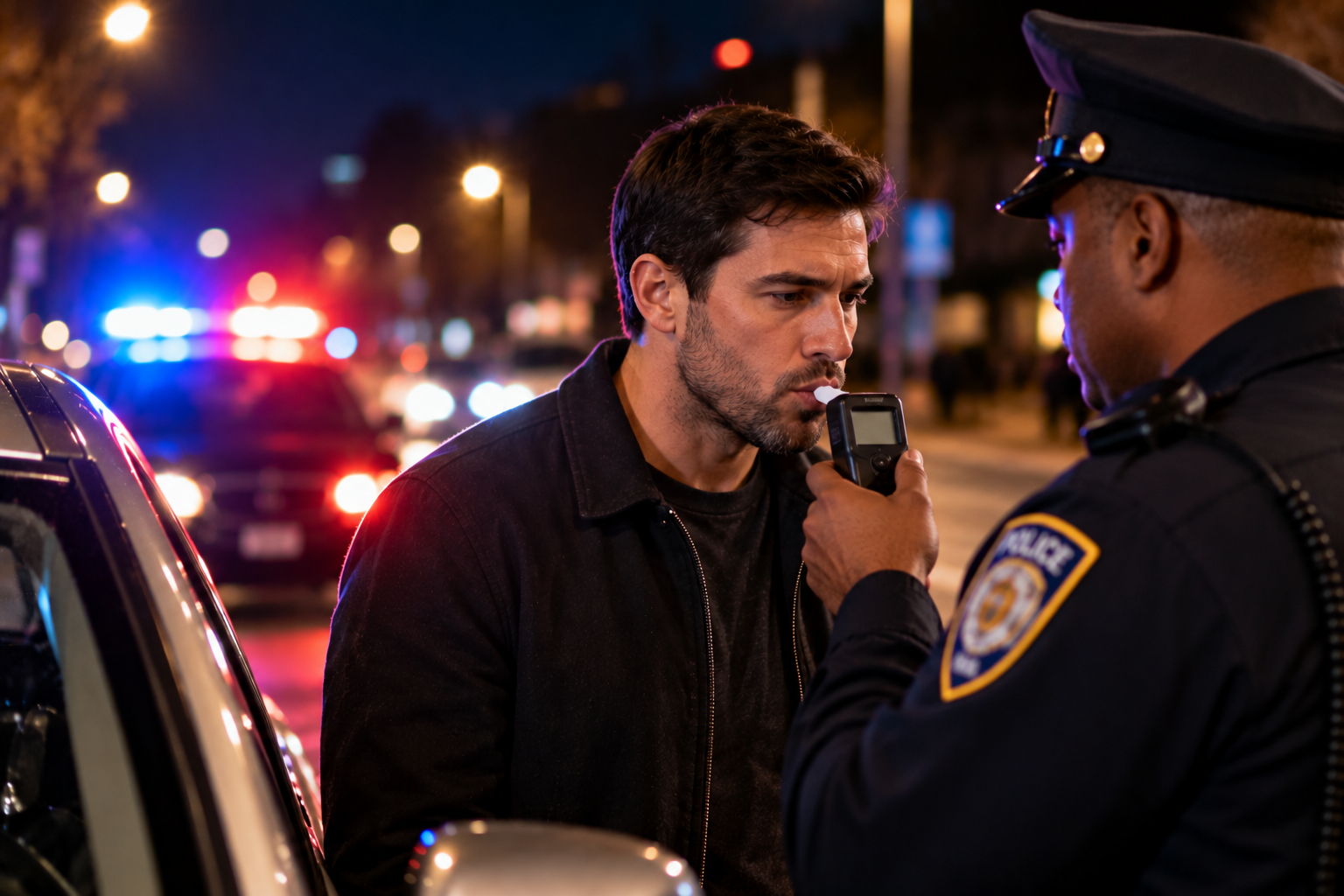

Did You Know You Can Get a DWI in New York Without Being Over the Legal Limit?
You go out for dinner with friends and have a couple of drinks.
A few hours later, you feel fine to drive home. You are not stumbling, your speech is normal, and you do not believe you are intoxicated.
Then you get pulled over.
After speaking with the officer and undergoing an investigation, you discover that your blood alcohol concentration is below 0.08%.
You assume that means you cannot be charged with drunk driving.
But in New York, that is not necessarily true.
Many drivers believe that staying below the legal alcohol limit automatically protects them from criminal charges or other alcohol related driving violations. However, New York law makes important distinctions between intoxication and impairment.
The 0.08% Limit Is Not the Whole Story
In New York, driving with a blood alcohol concentration (BAC) of 0.08% or higher generally establishes a basis for a per se Driving While Intoxicated (DWI) charge.
But a driver can also face a DWI charge based on evidence of intoxication, even without a BAC reading of 0.08% or higher.
This means the number on a breath test is not always the deciding factor.
An officer’s observations, a driver’s behavior, driving patterns, and other evidence may become relevant when determining whether someone was intoxicated.
A BAC below 0.08% does not automatically mean a driver is legally safe from a DWI charge.
Joop arteydiseño
Excelentes!! El personal es súper amigable, me atendió José de principio a fin y siempre me aclaró mis dudas. Recomendadísimos
DWI vs. DWAI: What Is the Difference?
New York recognizes different alcohol related driving offenses.
Driving While Intoxicated (DWI) generally involves a more serious level of impairment.
Driving While Ability Impaired by Alcohol (DWAI) applies when alcohol has impaired a person’s ability to operate a motor vehicle to any extent.
Unlike a typical DWI offense, alcohol related DWAI is generally classified as a traffic infraction for a first offense, rather than a misdemeanor.
That does not mean it is insignificant.
A DWAI conviction can still result in fines, a license suspension, and other consequences.
Understanding the difference between these offenses is important because a driver may face legal penalties even when their BAC is below 0.08%.
Can You Get Charged With a BAC Between 0.05% and 0.07%?
Yes, depending on the circumstances.
Under New York law, a BAC greater than 0.05% but less than 0.07% is relevant evidence that may be considered along with other competent evidence in determining whether a driver’s ability was impaired.
A BAC of 0.07% but less than 0.08% can provide prima facie evidence of impairment.
These readings do not automatically establish that a driver committed an offense in every case.
However, they demonstrate why the assumption that anything below 0.08% is legal can be misleading.
Even a relatively low BAC reading may become important when combined with an officer’s observations and other evidence.
What If You Feel Completely Fine?
Alcohol affects people differently.
Body weight, food consumption, drinking patterns, medications, and other factors can influence how alcohol affects a person’s driving ability.
You may feel alert and confident while still experiencing changes in reaction time, judgment, or coordination.
During a traffic stop, an officer may look for signs of impairment such as unusual driving behavior, difficulty following instructions, or problems with coordination.
Those observations do not automatically prove guilt, but they may become part of the evidence in a DWI or DWAI case.
Feeling sober is not the same as being legally unimpaired.
What Are the Consequences of a DWAI or DWI Conviction?
The penalties depend on the charge, the circumstances, and whether the driver has prior alcohol related offenses.
For a first alcohol related DWAI conviction, potential consequences include fines, a 90 day license suspension, and possible jail time.
A first misdemeanor DWI conviction can result in more serious penalties, including higher fines, potential incarceration, and a driver’s license revocation.
Additional requirements may apply, including alcohol screening, treatment, or an ignition interlock device in qualifying cases.
Prior convictions and aggravating circumstances can substantially increase the consequences.
For many drivers, losing the ability to drive can affect employment, family responsibilities, and everyday life.
What Should You Do If You Are Charged?
If you receive a DWI or DWAI charge, do not assume that a BAC below 0.08% means the case will automatically be dismissed.
The evidence must be examined carefully.
An attorney may review the reason for the traffic stop, the officer’s observations, chemical test results, testing procedures, and whether your legal rights were respected.
Every case is different, and the appropriate defense depends on the facts.
Seeking legal guidance early can help you understand the charge and the possible consequences before making important decisions about your case.
Do Not Let One Number Give You a False Sense of Security
The idea that drivers are automatically safe from legal consequences as long as their BAC remains below 0.08% is a common misunderstanding.
New York law considers more than a single number when evaluating alcohol related driving offenses.
The safest choice is to arrange a sober ride whenever you plan to drink.
At MontanaroLaw, we help New York drivers facing DWI, DWAI, and other alcohol related driving charges. If you have been arrested or charged with an alcohol related driving offense, contact us today to discuss your case and learn how we may be able to help protect your rights and driving privileges.
