


Understanding Liquidated Damages in Real Estate Transactions
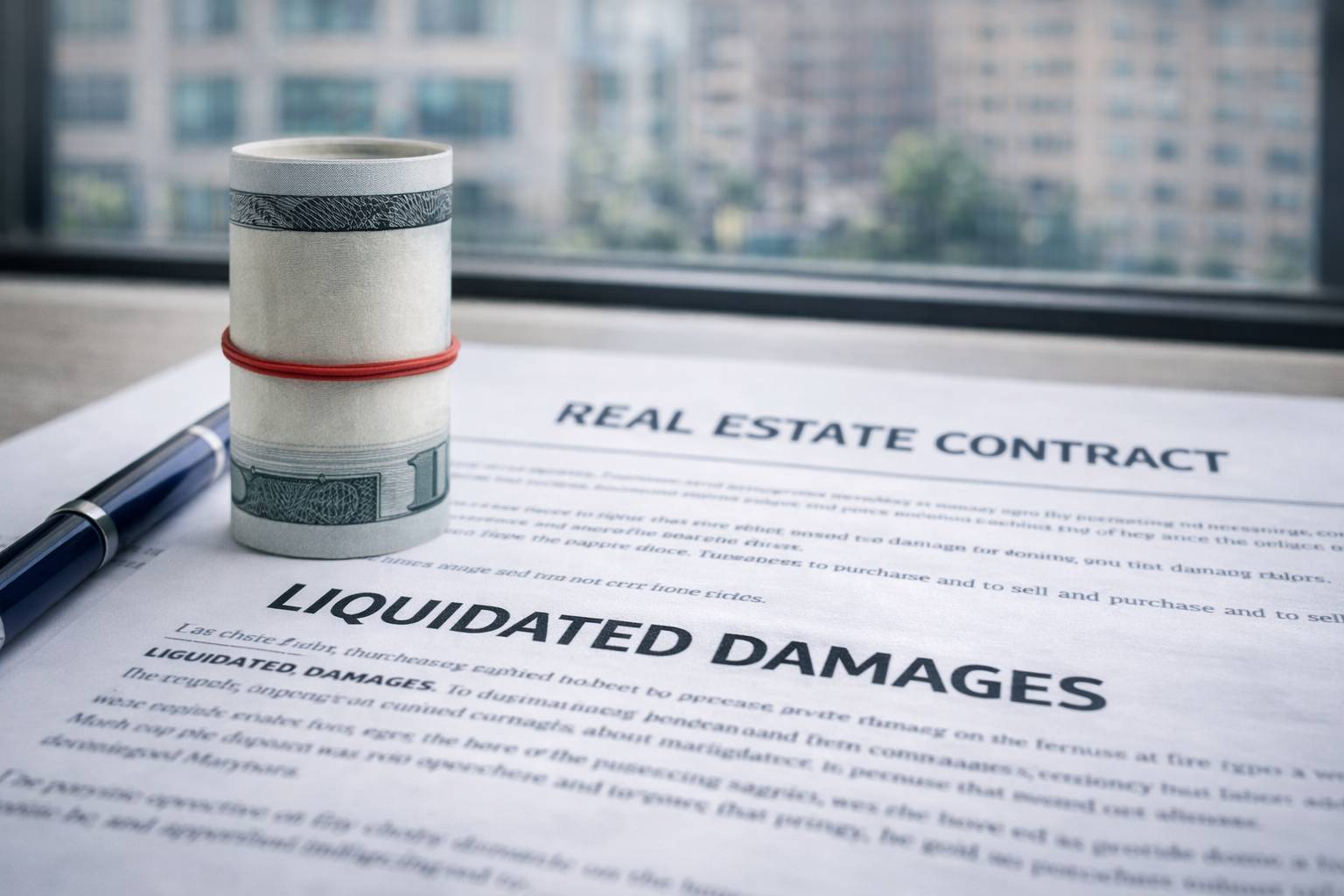
Liquidated damages are a common feature in real estate contracts and are designed to address what happens when a party fails to perform as promised. These provisions establish in advance the amount of money that must be paid if a contract is breached. Understanding how liquidated damages work is essential for buyers, sellers, and developers entering into real estate agreements.
Disputes over contract performance can be costly and time-consuming. Liquidated damages clauses are intended to provide certainty and reduce the need for lengthy litigation over actual losses.
What Are Liquidated Damages in a Contract
Liquidated damages are a predetermined sum agreed upon by the parties at the time a contract is formed. This amount represents a reasonable estimate of the damages that would result from a breach of the agreement.
In real estate transactions, liquidated damages often apply when a buyer fails to close on a purchase or when a seller cannot deliver clear title. Rather than requiring proof of actual financial loss, the contract specifies the amount recoverable in the event of default.
Courts generally enforce liquidated damages clauses when the amount reflects a fair estimate of potential harm and is not intended to punish the breaching party.
Dhruv Baria
I highly recommend Montanarolaw for traffic law matters. They were very knowledgeable about traffic laws and court procedures. They were able to achieve a positive outcome on my case and dismissed all violations Thank you
How Liquidated Damages Provisions Operate
When a contract contains a liquidated damages clause, the injured party may claim the specified amount without having to prove actual damages. The clause becomes operative upon a defined event, such as failure to close, failure to obtain financing within the contract period, or refusal to perform contractual obligations.
In many purchase agreements, liquidated damages take the form of forfeiture of a deposit or down payment. This provides the seller with compensation for lost time and potential market changes while allowing the buyer to limit financial exposure.
The specific operation of the clause depends on the language used and the circumstances triggering its application.

Why a Liquidated Damages Clause Is Important
A liquidated damages clause provides predictability for both parties. It allows each side to understand the financial consequences of a breach before entering into the agreement.
For sellers, it offers protection against buyers who withdraw late in the transaction process. For buyers, it can cap potential liability if unforeseen circumstances prevent completion of the deal.
These clauses also help avoid disputes over the amount of damages by eliminating the need to calculate and prove losses in court.
Negotiating Liquidated Damages in Agreements
Liquidated damages provisions are often negotiable and should be carefully reviewed before signing a contract. Parties may negotiate the amount, the conditions under which it applies, and whether it serves as the exclusive remedy for breach.
A clause that is set too high may be challenged as an unenforceable penalty. A clause that is too low may fail to compensate the nonbreaching party adequately. Balancing these interests requires an understanding of market conditions, transaction risks, and applicable law.
Clear drafting is essential to ensure that the clause reflects the parties’ intent and complies with legal standards.
Key Takeaways on Liquidated Damages
Liquidated damages are intended to compensate rather than punish. They must represent a reasonable estimate of anticipated loss at the time the contract is formed.
These clauses can streamline dispute resolution by providing a predetermined remedy for breach. However, enforceability depends on the fairness of the amount and the clarity of the contract language.
Understanding the role of liquidated damages in real estate transactions helps parties make informed decisions and manage risk more effectively.
Get Legal Guidance on Liquidated Damages Clauses
Liquidated damages provisions can significantly affect the financial outcome of a real estate transaction. Knowing how these clauses operate and when they are enforceable is critical before entering into a binding agreement.
Contact MontanaroLaw today to schedule a consultation and discuss how liquidated damages may apply to your real estate transaction and how to protect your interests under New York law.
