


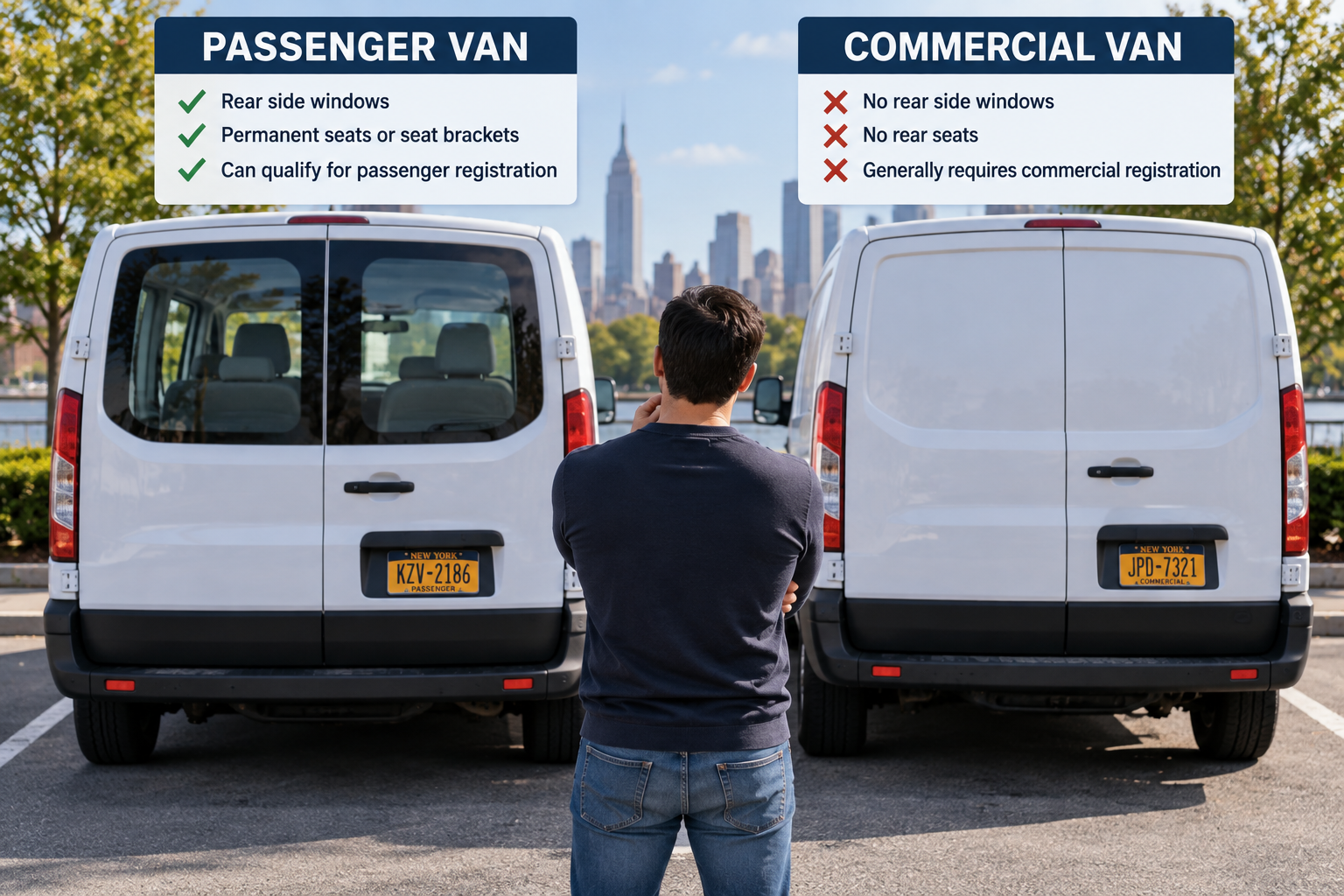

Two Vans Can Look Almost Identical. Why Is One Commercial and the Other Passenger?
You are looking at two vans parked next to each other.
Same size. Similar body. Same number of wheels.
But one has passenger plates and the other has commercial plates.
Why?
In New York, whether a van qualifies for passenger or commercial registration can depend on how the vehicle is constructed or modified. Something as simple as the configuration of the rear windows and seating can make an important difference.
For van owners, contractors, business owners, and anyone considering buying or modifying a van, understanding that distinction can help prevent registration problems and unexpected restrictions later.
A Van Is Generally Considered Commercial Unless It Qualifies Otherwise
New York DMV guidance starts with an important rule.
A van is generally considered a commercial vehicle and should receive commercial plates unless it has been constructed or modified in a way that allows it to qualify for passenger registration.
That means simply saying, “I only use the van personally,” does not necessarily answer the classification question.
The physical configuration of the vehicle matters.
Leah Rezza
MontanaroLaw has been instrumental in resolving tickets for us. They staff is wonderful and I would highly recommend them to anyone.
This Is Where the Windows and Seats Come In
According to New York DMV guidance, a van may qualify for passenger registration when it has at least one rear side window behind the cab and at least one permanently installed seat, or brackets designed for a seat, behind the driver.
Think about the difference between a passenger van and a typical cargo van.
A passenger van generally has windows and seating behind the front row because that space is designed to carry people.
A cargo van may have an enclosed rear area without passenger seating because that portion of the vehicle is designed primarily to carry property.
That physical difference can affect how DMV classifies the vehicle.
Do Not Look at the Windows Alone
This is where the rule can easily be misunderstood.
Seeing a window on the side of a van does not automatically mean the vehicle qualifies for passenger plates.
The seating configuration matters too.
A rear side window combined with qualifying permanently installed seating or seat brackets can help a van meet the passenger registration requirements identified by DMV.
A cargo van with an empty rear compartment should not automatically be assumed to qualify simply because it has glass somewhere behind the driver.
When evaluating a van, look at the entire rear configuration rather than one feature.
Converting the Van Can Change the Question
Vans are frequently modified.
A contractor may remove seats to create additional cargo space.
Someone who bought a former passenger van may convert the rear into storage for tools and equipment.
Another owner may turn a cargo van into a camper.
Those modifications can matter.
New York DMV also identifies vans whose interiors have been altered and equipped as living quarters as qualifying for passenger registration. DMV gives examples of permanently installed equipment such as beds, a stove, or a refrigerator.
The important point is that the classification may depend on what the van is actually equipped to do, not simply what the vehicle looked like when it originally left the dealership.
Why Does Passenger or Commercial Classification Matter?
The difference is more than the letters or numbers printed on a license plate.
Vehicle classification can affect registration requirements and fees. It can also become important when determining where and how a vehicle may be operated.
Certain roads and parkways restrict commercial traffic.
Parking rules can also treat passenger and commercial vehicles differently, particularly in New York City.
That means the wrong assumption about a van’s classification can create problems long after the vehicle is purchased.
A driver may believe the van is simply another personal vehicle while the applicable registration or traffic rules say otherwise.
New York City Creates Another Layer of Rules
Drivers who regularly enter New York City should be particularly careful.
New York City has its own rules concerning what qualifies as a commercial vehicle for purposes such as parking, standing, and stopping.
Those rules are not necessarily identical to the New York State DMV rules used to determine vehicle registration.
For example, New York City looks at factors including commercial plates, whether rear seating and seat fittings have been removed to facilitate transporting property, and whether required identifying information appears on the vehicle.
So a van owner should not assume that understanding the DMV registration classification answers every question about how that van may be treated once it enters New York City.
Buying a Van? Check Before You Modify It
This issue is particularly important for someone purchasing a van for a business.
Maybe you are a contractor, electrician, plumber, painter, delivery business, or another professional who needs space for tools and equipment.
Or perhaps you are buying a van for personal travel and want to remove or install seats.
Before making significant modifications, it is worth understanding whether those changes could affect the vehicle’s classification and how you intend to use it.
The same applies when buying a used van that someone else has already modified.
Do not assume the current configuration, registration, and intended use all match.
The Difference May Be Sitting Right Behind the Driver
Two vans can look nearly identical when they pass you on the road.
But what is behind the driver’s seat can make an important difference.
Windows, permanent seating, cargo modifications, living quarters, registration, and intended use can all become relevant when determining how a van should be classified.
And when that classification is wrong, the owner may encounter registration issues, restrictions, or traffic related consequences they never expected.
At MontanaroLaw, we help New York drivers address traffic tickets and issues involving the rules that apply to their vehicles. If you received a ticket involving the classification, registration, operation, or use of your van, contact us today to fight your ticket and help protect your license and driving record.
