


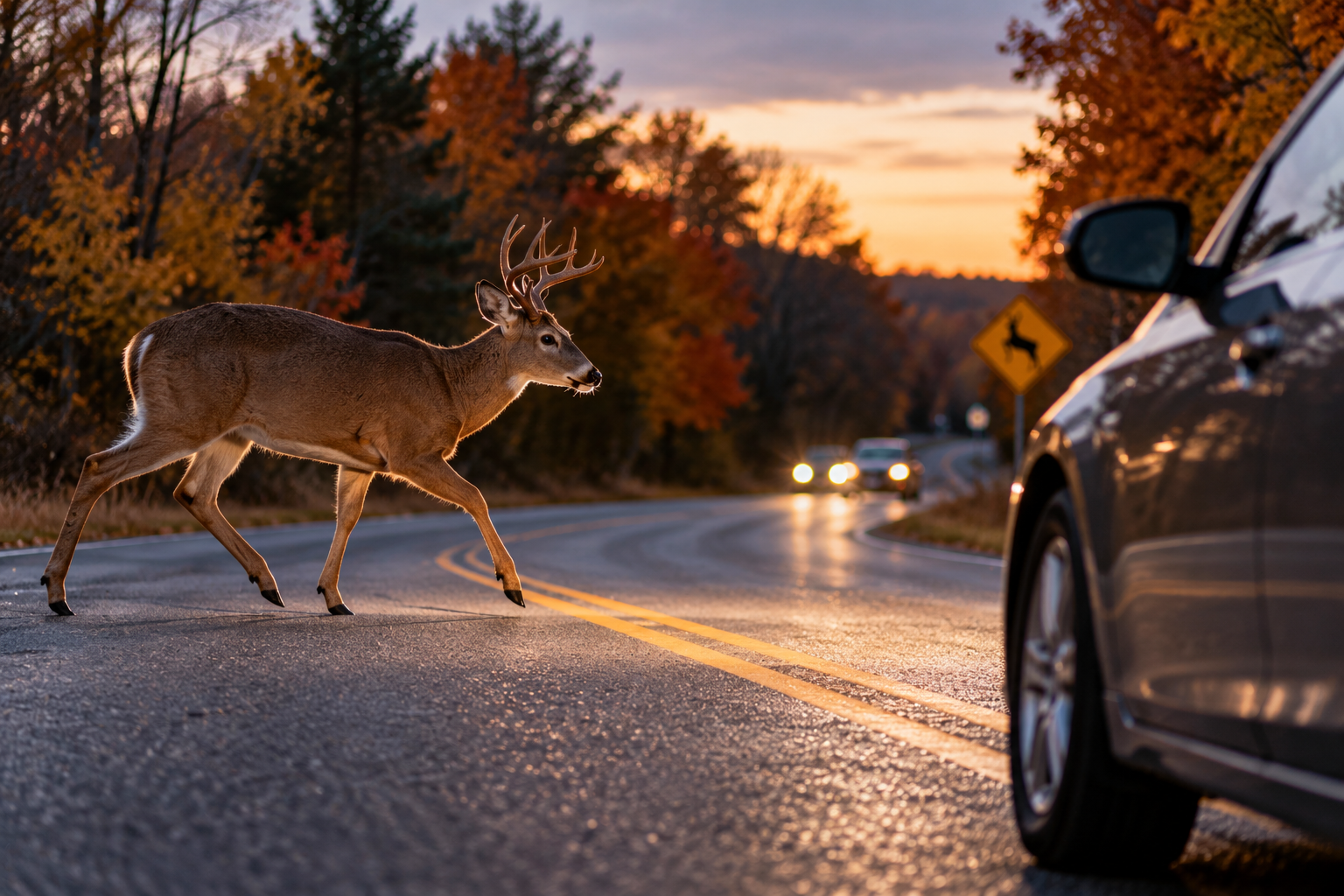

A Deer Jumps Into the Road. You Swerve and Hit Another Car. Who Is Responsible?
You’re driving home on a quiet New York road when a deer suddenly runs into your lane.
You have only seconds to react.
You turn the steering wheel to avoid hitting the animal, but your car crosses into the opposite lane and collides with another vehicle.
You were trying to prevent an accident. Instead, you caused one.
Now comes the question: Who is legally responsible?
Deer encounters are especially common during the fall, and understanding how New York determines fault can make a major difference after an accident.
Avoiding a Deer Does Not Automatically Mean You Are Not at Fault
Many drivers assume that if an animal unexpectedly enters the road, any resulting accident must be considered unavoidable.
Unfortunately, it is not always that simple.
In New York, accident liability often depends on whether a driver acted reasonably under the circumstances.
If you swerve into another lane and strike a vehicle, investigators and insurance companies may examine whether your reaction was reasonable, whether you were traveling at a safe speed, and whether another response could have prevented the collision.
The fact that you were trying to avoid a deer does not automatically eliminate responsibility.
However, it also does not automatically make you negligent.
The specific circumstances matter.
Miguel Ortega
Very profesional lawyer Mark Montanaro He fought for my case very satisfied for it
What If You Had No Time to React?
Imagine a deer suddenly appears directly in front of your vehicle.
There is no warning, no time to slow down gradually, and no obvious safe escape route.
New York recognizes that drivers sometimes face sudden emergencies that leave little time for careful decision making.
In certain circumstances, the emergency doctrine may be relevant when evaluating whether a driver’s response was reasonable.
But it is not a guaranteed defense.
The emergency must not have been created by the driver’s own negligence, and the driver’s reaction must still be evaluated under the circumstances.
For example, driving too fast for a dark, wooded road could affect how the situation is viewed.
What If Another Driver Gets Hurt?
A collision caused by swerving can involve much more than damage to two vehicles.
The other driver or their passengers may suffer injuries, require medical treatment, or miss work.
They may also pursue compensation if they believe your negligence contributed to the accident.
New York follows a comparative negligence system, meaning responsibility can be divided among parties based on their respective fault.
That makes evidence especially important.
The location of the deer, road conditions, vehicle damage, witness statements, and the actions of each driver may all become relevant when determining what happened.
Is Hitting the Deer Different From Hitting Another Car?
Yes, particularly when it comes to insurance.
If your vehicle strikes a deer directly, the damage is generally handled under comprehensive coverage, assuming your policy includes it.
If you swerve and collide with another vehicle or an object, the resulting damage may instead involve collision coverage and potential liability claims.
The exact coverage depends on your insurance policy and the circumstances of the accident.
This distinction can surprise drivers who believed avoiding the animal would necessarily be the better outcome.
What Should You Do After a Deer Related Accident?
If you are involved in a collision, your first priority should be everyone’s safety.
Call for emergency assistance when necessary, and report the accident as required by New York law.
If it is safe to do so, document the scene, including vehicle positions, road conditions, damage, and any evidence that an animal entered the roadway.
Exchange information with the other driver and preserve any available dashcam footage or witness contact information.
Avoid guessing about fault or making assumptions about what an insurance company will decide.
If someone was injured or responsibility is disputed, speaking with an attorney can help you understand your legal options.
The Safest Reaction May Not Be the Most Instinctive One
When a deer suddenly appears, a driver’s instinct may be to turn sharply to avoid it.
But an abrupt maneuver can place the vehicle in oncoming traffic, another lane, or off the roadway.
New York DMV advises drivers to slow down, brake firmly, and avoid swerving when encountering deer.
During the fall, drivers should be especially alert near wooded areas, around dawn and dusk, and wherever deer crossing signs are posted.
A few extra seconds of caution may help prevent a serious accident.
One Sudden Turn Can Lead to Serious Consequences
An encounter with a deer can happen in an instant, but the consequences of a collision can last much longer.
Vehicle damage, injuries, insurance disputes, and questions about fault can turn an unexpected encounter into a complicated legal situation.
At MontanaroLaw, we help New York drivers navigate traffic violations and legal issues arising from motor vehicle accidents. If you were involved in a collision or received a traffic ticket after swerving to avoid an animal, contact us today to discuss your case and learn how we may be able to help protect your rights.
