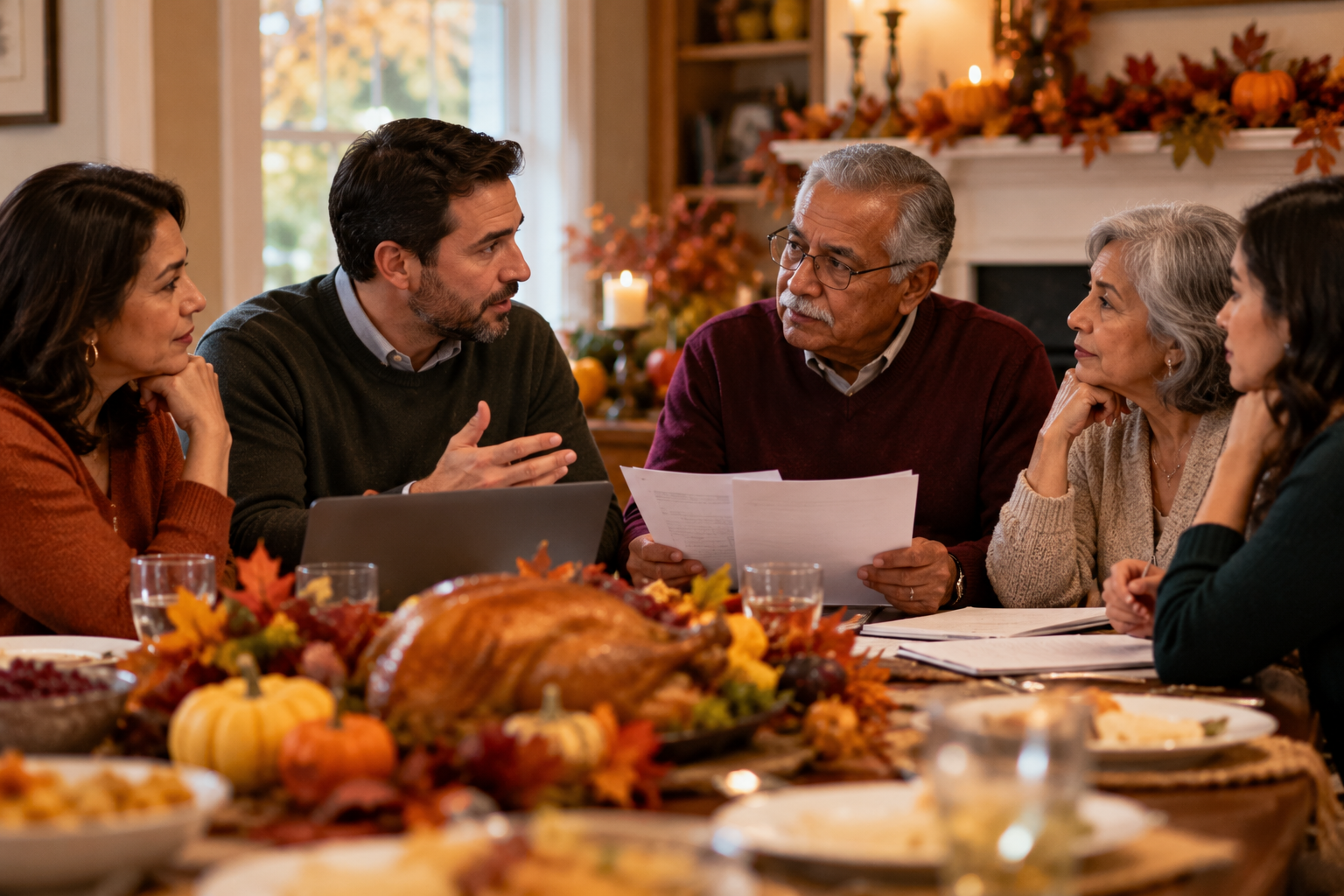

Everyone Is Coming Home for Thanksgiving. Is It Time to Talk About the Family’s Future?
Thanksgiving is one of the few times of year when the entire family may be sitting around the same table.
Parents, adult children, grandparents, and relatives who live out of state finally have an opportunity to spend time together.
Between preparing dinner, sharing stories, and catching up, someone might mention that Mom has been thinking about downsizing. Dad may be considering retirement. Or an adult child may have noticed that a parent’s health or financial needs are changing.
These conversations can raise important questions about the future.
Who would make decisions if a parent became unable to manage their affairs? What would happen to the family home? Does everyone know where important documents are kept?
Thanksgiving may not be the time to make every decision, but it can be an opportunity to start a conversation that many families have been putting off.
The Conversations Families Keep Postponing
It is easy to assume there will always be time to discuss estate planning.
Parents may feel they are too young to worry about it. Adult children may hesitate to bring up sensitive topics because they do not want to seem intrusive.
As a result, important questions can remain unanswered for years.
Then an unexpected illness, accident, or death leaves family members trying to make decisions without knowing what their loved one wanted.
Having these conversations before an emergency can help reduce uncertainty and potential disagreements.
Xavier Bellot
Mark was a well professional lawyer to my case I followed his instructions to the letter and saved me a nightmare of fines I will b using his service anytime also very affordable
Who Would Make Decisions If Something Happened?
One of the most important questions families can discuss is who would be responsible for making decisions if a loved one became unable to do so.
In New York, a power of attorney can allow a person to designate someone to handle certain financial and legal matters.
A health care proxy allows an individual to appoint someone to make health care decisions if the individual loses the ability to make those decisions.
These documents serve different purposes.
Without appropriate planning, loved ones may face additional legal complications when trying to manage finances or make important decisions during an already stressful time.
Thanksgiving can be an opportunity to ask whether these arrangements exist and whether the people named in them are still the right choices.
What Happens to the Family Home?
For many families, the home is one of their most valuable assets.
It may also be the place where children grew up and generations gathered for holidays.
But sentimental value does not always translate into a clear plan.
One child may want to keep the property. Another may prefer to sell it. A third may live out of state and have little interest in maintaining it.
If these differences are never discussed, they can become sources of conflict later.
A thoughtful estate plan can address how property should pass, who may be responsible for managing it, and whether a will, trust, or another planning strategy may be appropriate.
The right approach depends on the family’s circumstances and goals.
Does Everyone Know Where the Important Documents Are?
Imagine a parent has already created a will, signed a power of attorney, and prepared other estate planning documents.
That is a good start.
But what happens if no one knows where those documents are located?
Family members may struggle to find essential information when it is needed most.
Parents do not have to share every financial detail during Thanksgiving dinner.
However, it can be helpful for trusted individuals to know where important documents are stored and whom to contact if assistance becomes necessary.
That simple step can save time and confusion during an emergency.
Avoid Turning Thanksgiving Dinner Into a Family Meeting
There is a difference between opening a conversation and pressuring relatives to make major decisions.
Estate planning involves personal wishes, finances, family relationships, and sometimes difficult emotions.
Not everyone will feel comfortable discussing those matters in front of the entire family.
Instead of asking detailed questions at the dinner table, consider having a private conversation with the appropriate family members.
You might simply ask whether your parents have updated their important documents or whether there is anything they would like the family to understand about their future wishes.
The goal is not to resolve every issue immediately.
It is to create an opportunity for thoughtful planning.
What If Family Members Disagree?
Even close families may have different opinions about the future.
One sibling may believe a parent should remain in the family home. Another may be concerned about long term care needs. Someone else may worry about who will eventually be responsible for managing finances.
These disagreements can become more difficult when family members assume their preferences should determine the outcome.
When a parent has the legal capacity to make decisions, their wishes should remain central to the planning process.
An estate planning attorney can help individuals understand their options, document their intentions, and address potential complications before they become disputes.
Give Your Family More Than Good Memories This Thanksgiving
Thanksgiving is about family, gratitude, and spending time with the people who matter most.
It can also be a reminder that protecting those relationships sometimes requires planning for difficult situations before they happen.
A simple conversation today may help loved ones avoid confusion, unnecessary stress, and disagreements in the future.
At MontanaroLaw, we help New York individuals and families create estate plans that reflect their wishes and protect what matters most. If your family is ready to discuss wills, trusts, powers of attorney, or other estate planning needs, contact us today to begin planning for the future.