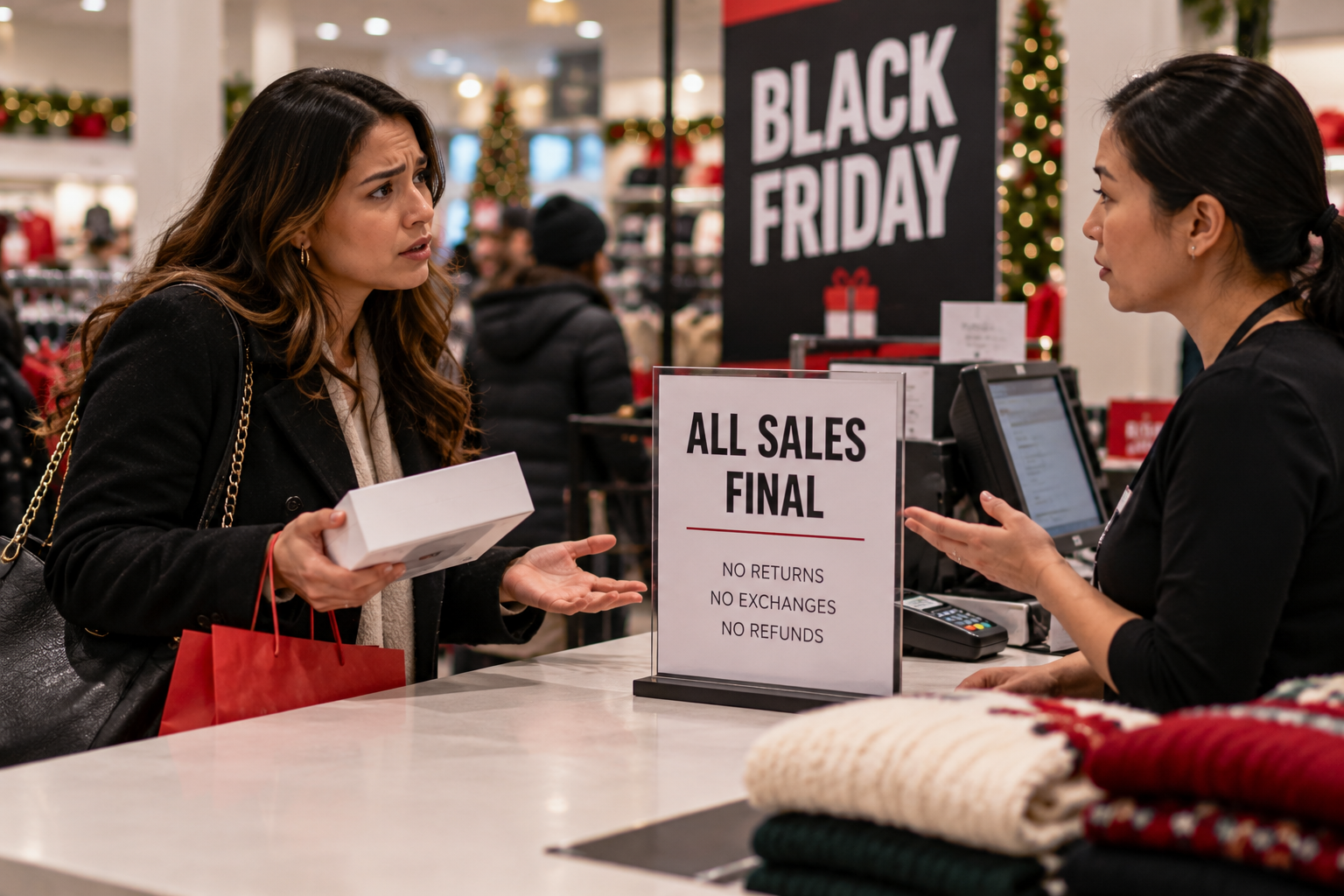

Black Friday Is Almost Here. Can Your Business Legally Say “All Sales Final”?
Black Friday is approaching, and your store is preparing for one of the busiest shopping days of the year.
You’ve marked down merchandise, advertised special deals, and put up a sign that says “All Sales Final.”
Then a customer returns a few days later.
They want their money back.
You explain that the item was purchased during a final sale, but the customer insists that you are legally required to issue a refund.
Now you’re wondering whether your store’s return policy will actually protect you.
For New York business owners, having a return policy is important. But how that policy is communicated can make a major difference.
Can a New York Store Refuse Returns?
Generally, yes.
New York retailers can establish their own return and refund policies, including policies that restrict or prohibit returns.
That means a business may be able to sell certain merchandise on a final sale basis.
However, there is an important requirement.
New York law generally requires retail businesses to clearly post their refund policies.
If a store does not properly disclose its policy, New York law generally requires it to accept returns of unused, undamaged merchandise within 30 days of purchase, subject to certain exceptions.
Simply deciding that all sales are final is not enough if customers were never properly informed.
Bryan Golden
Montanaro Law did an incredible job for me. I would absolutely recommend them to anyone that needs an attorney.
Where Should You Display Your Return Policy?
Imagine placing a small “No Refunds” notice behind the register, where customers cannot easily see it until after paying.
That could create a problem.
Under New York law, refund policies must be conspicuously posted so customers can review them before making a purchase.
The policy should clearly explain the store’s conditions for returns.
Depending on the policy, that may include whether refunds are offered, whether exchanges or store credit are available, applicable time limits, and whether proof of purchase is required.
For business owners, clear signage can help prevent disputes before they begin.
Does “All Sales Final” Apply to Every Situation?
Not necessarily.
A final sale policy generally addresses a customer’s ability to return merchandise simply because they changed their mind.
It does not automatically eliminate every legal obligation a business may have.
For example, merchandise that is defective, misrepresented, or does not meet applicable legal requirements may raise issues under consumer protection laws or warranty rules.
A business should not assume that displaying an “All Sales Final” sign protects it from every complaint involving a product.
The reason for the requested return matters.
What About Black Friday Discounts and Clearance Items?
Holiday promotions often involve heavily discounted merchandise.
A business may want different return rules for clearance items, seasonal products, or special Black Friday purchases.
That can be possible, but the restrictions should be communicated clearly before the sale.
For example, if regularly priced merchandise can be returned within 14 days but Black Friday purchases are final, customers should be able to understand that distinction before buying.
Confusing or inconsistent policies can create unnecessary disputes.
The same concern applies when employees give customers information that contradicts the store’s posted policy.
Can You Offer Store Credit Instead of a Refund?
A business may establish a policy that provides exchanges or store credit rather than cash refunds, subject to applicable law.
However, customers should be informed of those terms before purchasing.
If your business offers store credit, the policy should explain when it is available and any relevant conditions.
Clear communication matters because a customer expecting a refund may not be satisfied when offered a gift card instead.
A properly disclosed policy can help set expectations and reduce disagreements.
What If a Customer Disputes the Charge?
A customer who is unhappy with a purchase may contact their credit card company and dispute the transaction.
This can create another challenge for business owners.
Even when a store has a valid return policy, payment card network rules and the circumstances of the transaction may affect how a chargeback is handled.
Businesses should keep records of purchases, receipts, return policies, and communications with customers.
These records may become important if a payment dispute arises.
Review Your Policy Before the Holiday Rush
The days leading up to Black Friday are a good opportunity to review how your business handles returns.
Make sure your policy is clearly displayed, easy to understand, and consistent with what employees tell customers.
If certain merchandise is excluded from returns, identify those restrictions.
If your business offers exchanges or store credit, explain the conditions.
It is also worth reviewing your online store’s policies if you sell merchandise through a website.
A clear policy can protect your business while helping customers understand what they are agreeing to before making a purchase.
A Small Sign Can Prevent a Big Dispute
Holiday sales can bring increased revenue, but they can also bring more customer complaints and disagreements.
An unclear return policy can turn a routine purchase into a frustrating dispute.
Before the Black Friday rush begins, take the time to make sure your business’s policies are properly communicated and legally appropriate.
At MontanaroLaw, we help New York business owners address contracts, legal obligations, and business disputes. If you need assistance reviewing your business policies or resolving a customer related legal issue, contact us today to discuss how we may be able to help protect your business.