


The Fence Has Been There for 20 Years. Then the Survey Says It’s on Your Neighbor’s Property.
The fence was there when you bought the house.
It separates the yards. You mow up to it. Your neighbor maintains the other side. Nobody has questioned it for years.
Then you decide to sell your home, build an addition, install a pool, or replace the fence.
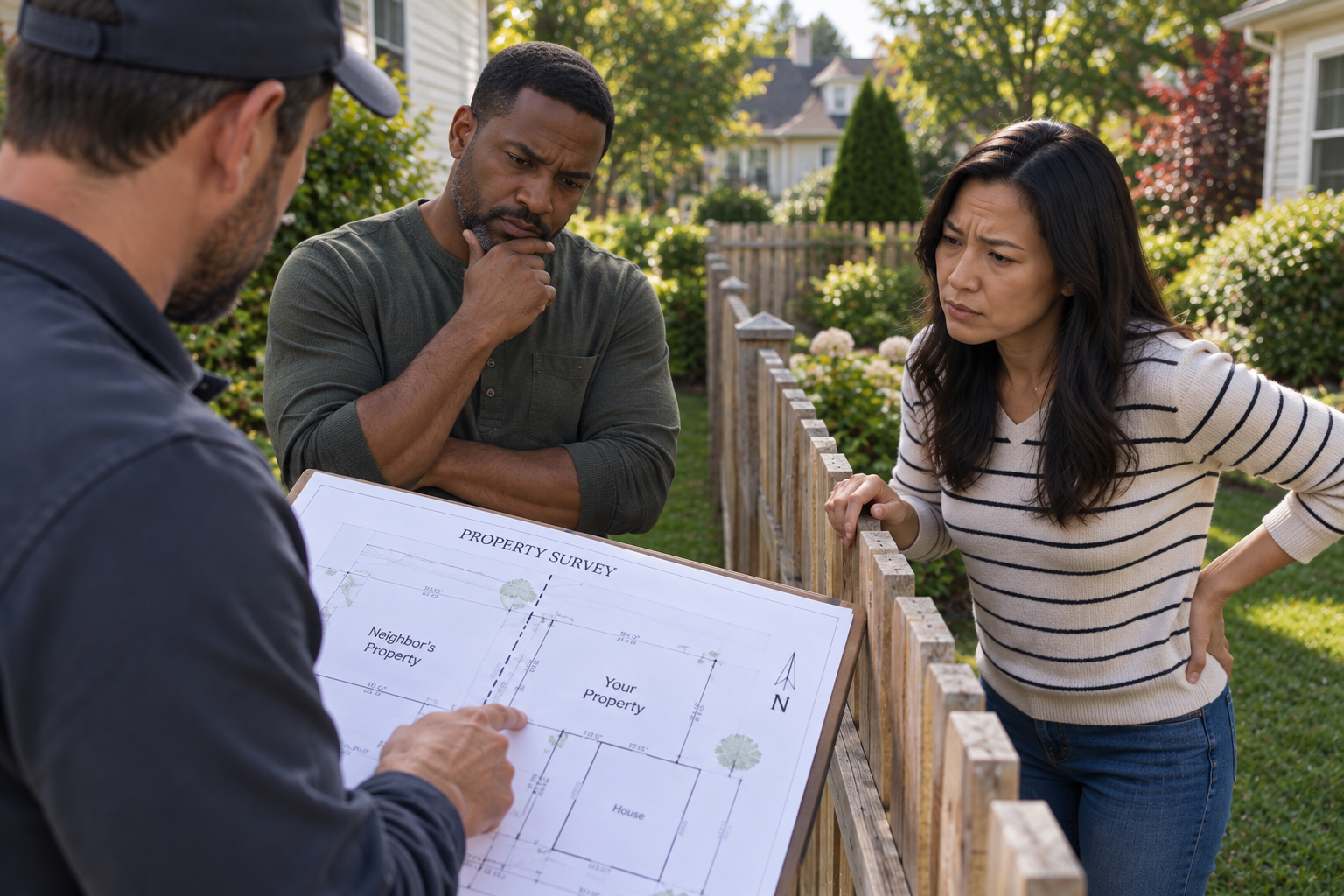
A new property survey comes back and shows something unexpected.
The fence does not follow the property line.
Maybe it sits two feet onto your neighbor’s property. Maybe their driveway crosses onto yours. Maybe the shed you assumed was safely inside your yard is much closer to the boundary than anyone realized.
Now what?
A fence may look like the obvious dividing line between two properties, but where a fence stands and where the legal property line exists are not always the same thing.
A Fence Does Not Automatically Establish the Property Line
This is one of the biggest misconceptions homeowners have about property boundaries.
A fence can exist in the same location for decades without necessarily establishing legal ownership of the land underneath or around it.
Fences are installed for many reasons. A previous homeowner may have guessed where the boundary was. Neighbors may have agreed to place a fence in a convenient location. An old fence may have been replaced without anyone checking a survey.
That is why a current survey can be so important.
A survey can identify property lines and reveal potential encroachments that may not be obvious from simply looking at the yard.
Yudi veras
Excelentes abogado rápidos y eficaz los recomiendo 💯 %
What If the Fence Is on Your Neighbor’s Property?
Suppose your survey shows that part of your fence extends beyond your property line.
That does not necessarily mean you should immediately tear it down.
First, it is important to understand the survey and determine exactly what is crossing the boundary.
The next step may involve reviewing deeds, prior surveys, title documents, and other records concerning the properties.
Sometimes the issue can be resolved through a conversation and a written agreement between neighbors.
Other situations may involve more complicated questions about ownership, use of the property, or whether the encroachment has existed for a significant period of time.
What If Your Neighbor Is Using Part of Your Property?
The opposite situation can be just as concerning.
You may discover that your neighbor’s fence, shed, driveway, landscaping, or another improvement extends onto land that your survey identifies as yours.
It may be tempting to ignore a small encroachment to avoid creating tension with a neighbor.
But allowing another person to use part of your property for an extended period can potentially create legal issues later.
Before deciding to ignore the problem, move the improvement yourself, or demand that your neighbor remove it, it is worth understanding your property rights and the possible consequences of each option.
Does Adverse Possession Mean They Get the Land?
This is often the first phrase homeowners hear when an old boundary problem is discovered.
Adverse possession is a legal doctrine that can allow someone to claim ownership rights to property belonging to another person when specific legal requirements are satisfied over the required period of time.
But an old fence alone does not automatically mean your neighbor now owns part of your yard.
These cases depend heavily on the facts, including how the property was used, how long the situation existed, and whether the legal requirements for an adverse possession claim have actually been met.
If a boundary has been treated a certain way for many years, it is important to have the situation evaluated rather than assuming either homeowner automatically wins.
Boundary Problems Often Appear When Someone Wants to Sell
Many homeowners live for years without ever looking closely at their property survey.
Then they decide to sell.
A buyer’s attorney, title company, lender, or new survey may identify an encroachment that suddenly needs attention before the transaction can move forward.
The same thing can happen when a homeowner wants to refinance or make significant improvements to the property.
A problem that nobody cared about for twenty years can become very important when money, construction, or a closing date is involved.
Addressing the issue early may provide more options than discovering it days before a scheduled closing.
Do Not Move the Fence Before You Know Where You Stand
When a property line dispute develops, emotions can escalate quickly.
One neighbor may insist that the fence has always marked the boundary. The other may arrive with a new survey and demand that it be moved immediately.
Before removing a fence, building a new one, or making permanent changes to the property, gather the relevant documents.
That may include the current survey, previous surveys, deeds, title documents, permits, photographs, and any written agreements between prior owners.
An attorney can review those materials and help determine what rights and options may exist.
In some cases, neighbors may be able to resolve the issue through an agreement rather than litigation.
A Few Feet of Property Can Become a Major Problem
Property boundary disputes often begin with something that seems small.
A fence is slightly out of place. A driveway crosses the line. A shed sits where nobody expected it to be.
But even a small strip of land can affect property rights, future improvements, financing, and the sale of a home.
At MontanaroLaw, we help New York property owners address real estate disputes and issues that can affect their homes and transactions. If a survey revealed a boundary problem, an encroachment, or a dispute with a neighbor, contact us today to discuss your situation and learn how we may be able to help protect your property rights.
