
Halloween Night Traffic Stops: When Can Police Search Your Car in New York?
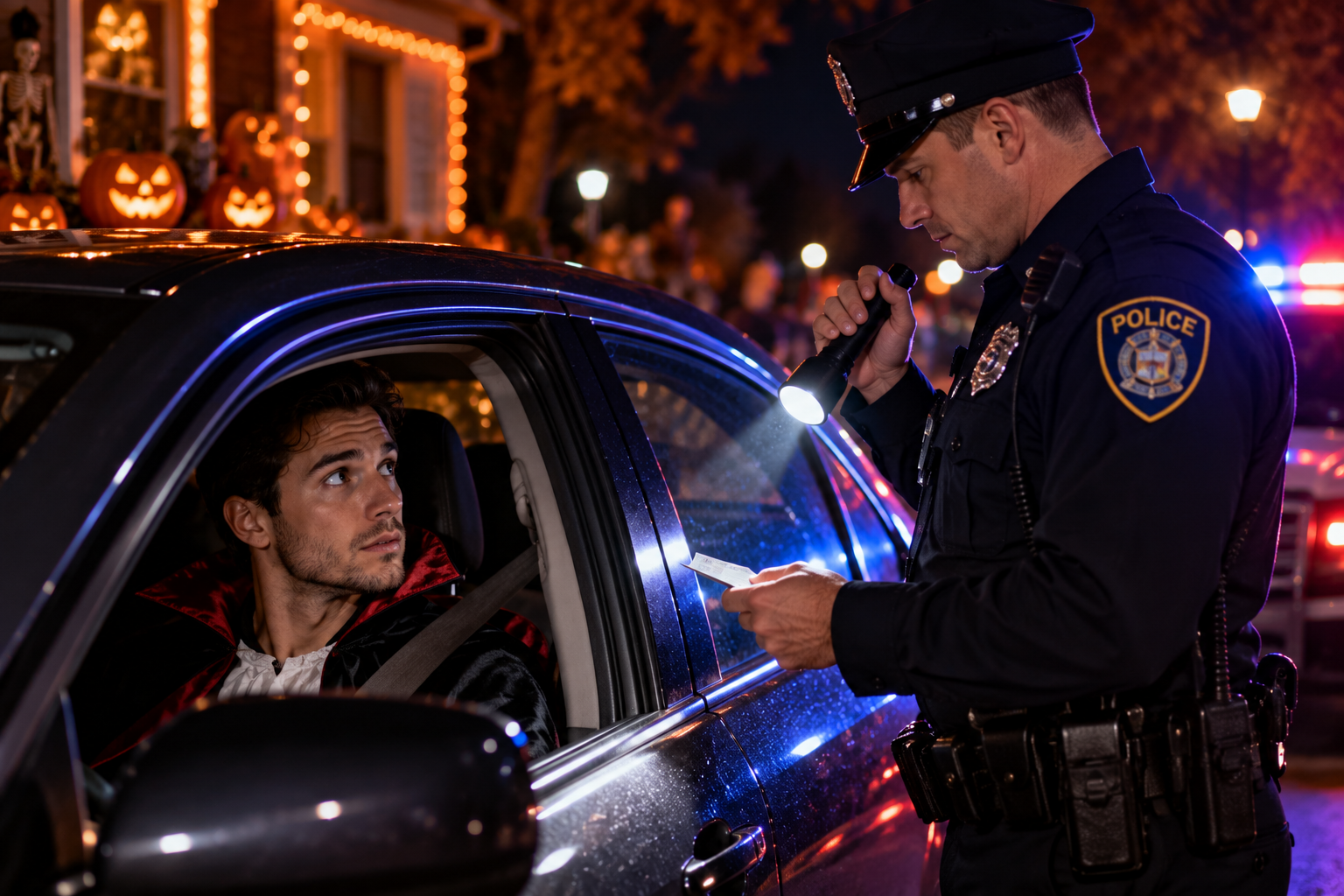
You’re driving home from a Halloween party when you see flashing red and blue lights in your rearview mirror.
You pull over, roll down your window, and wait for the officer to approach.
After asking a few questions, the officer says, “Do you mind if I take a look inside your car?”
Now you’re wondering whether you have to say yes.
Halloween weekend often brings increased attention to impaired driving and traffic safety. But whether you’re leaving a party, driving home from work, or simply passing through a checkpoint, it’s important to understand your rights during a New York traffic stop.
Does Getting Pulled Over Give Police the Right to Search Your Car?
No. A traffic stop does not automatically give police permission to search your vehicle.
An officer may have a lawful reason to stop you for speeding, failing to signal, or another traffic violation. However, the legal justification for stopping a vehicle is not necessarily enough to justify searching it.
Police generally need a recognized legal basis to conduct a vehicle search.
That basis may involve your consent, probable cause, a lawful arrest under circumstances that permit a related search, or another applicable exception to the warrant requirement.
The details of the encounter matter.
David Stanghellini
Mark and his firm represented me for a speeding violation. He and his firm were professional, kept me informed of the status of my case (it was deferred at least three times), and thorough in handling all aspects. In the end Mark and his team were able to get my violation dismissed without any points or conviction on my record. I am thankful for their diligence in representing me and fighting for me. Thank you!
Can You Refuse to Let an Officer Search Your Vehicle?
In many situations, yes.
If an officer asks for permission to search your car, you generally have the right to decline a voluntary search.
You can calmly state that you do not consent.
Refusing consent does not necessarily prevent a search if police have another lawful basis to conduct one.
It is also important to understand that refusing a voluntary vehicle search is different from refusing a legally required breath test or other obligation that may arise during a DWI investigation.
The safest approach is to remain respectful, avoid physical interference, and understand that you can challenge the legality of a search through the legal process.
What If the Officer Smells Alcohol or Marijuana?
This is where traffic stops can become more complicated.
If an officer suspects that a driver is impaired, they may investigate further.
The smell of alcohol, a driver’s behavior, visible containers, statements, or other observations may become relevant to that investigation.
Marijuana presents a particularly important distinction under New York law.
Although adult cannabis possession and use are legal in certain circumstances, driving while impaired by cannabis remains illegal.
New York law also generally prohibits police from using the odor of cannabis alone as the basis for a vehicle search. However, an exception may apply to a limited search when an officer reasonably suspects that the driver is impaired by cannabis and the search is directed toward evidence of that impairment.
The circumstances of the stop and the officer’s observations can significantly affect what actions are legally permitted.
What About Halloween DWI Checkpoints?
Police may conduct sobriety checkpoints to identify impaired drivers.
In New York, properly conducted sobriety checkpoints can be lawful when they meet applicable constitutional requirements.
However, a checkpoint does not give officers unlimited authority to search every vehicle.
Officers must still act within the law, and the circumstances of an individual encounter may affect whether further questioning, detention, or a search is permitted.
If you encounter a checkpoint, follow lawful directions and avoid making sudden or unsafe movements.
What If Police Search Your Car Without Permission?
A search without your consent is not automatically illegal.
Police may rely on another exception to the warrant requirement.
However, if a search violates your constitutional rights, evidence obtained through that search may be subject to suppression in a criminal case.
For example, if officers discover an item during a vehicle search and you are subsequently charged with a crime, your attorney may examine whether the search was legally justified.
The answer can depend on why the vehicle was stopped, what officers observed, what was said, and how the search occurred.
What Should You Do During a Traffic Stop?
A traffic stop can be stressful, especially at night.
Remain calm and keep your hands visible. Provide your license, registration, and proof of insurance when lawfully requested.
If an officer asks to search your vehicle, you can ask whether the search is voluntary and clearly state if you do not consent.
Do not physically resist a search, even if you believe it is improper.
If you receive a ticket or are arrested, remember as much as possible about the encounter, including what the officer said and what occurred before the search.
An attorney can review those details and determine whether your rights may have been violated.
Do Not Let Halloween Night Turn Into a Legal Nightmare
Halloween should be about enjoying the evening, not dealing with unexpected criminal charges or traffic violations.
Understanding the difference between a lawful traffic stop and a lawful vehicle search can help you make informed decisions if you encounter police.
At MontanaroLaw, we help New York drivers facing traffic violations and criminal charges. If you were arrested, received a traffic ticket, or have questions about a vehicle search, contact us today to discuss your case and learn how we may be able to help protect your rights.