



Using GPS Behind the Wheel: When Can It Lead to a New York Traffic Ticket?
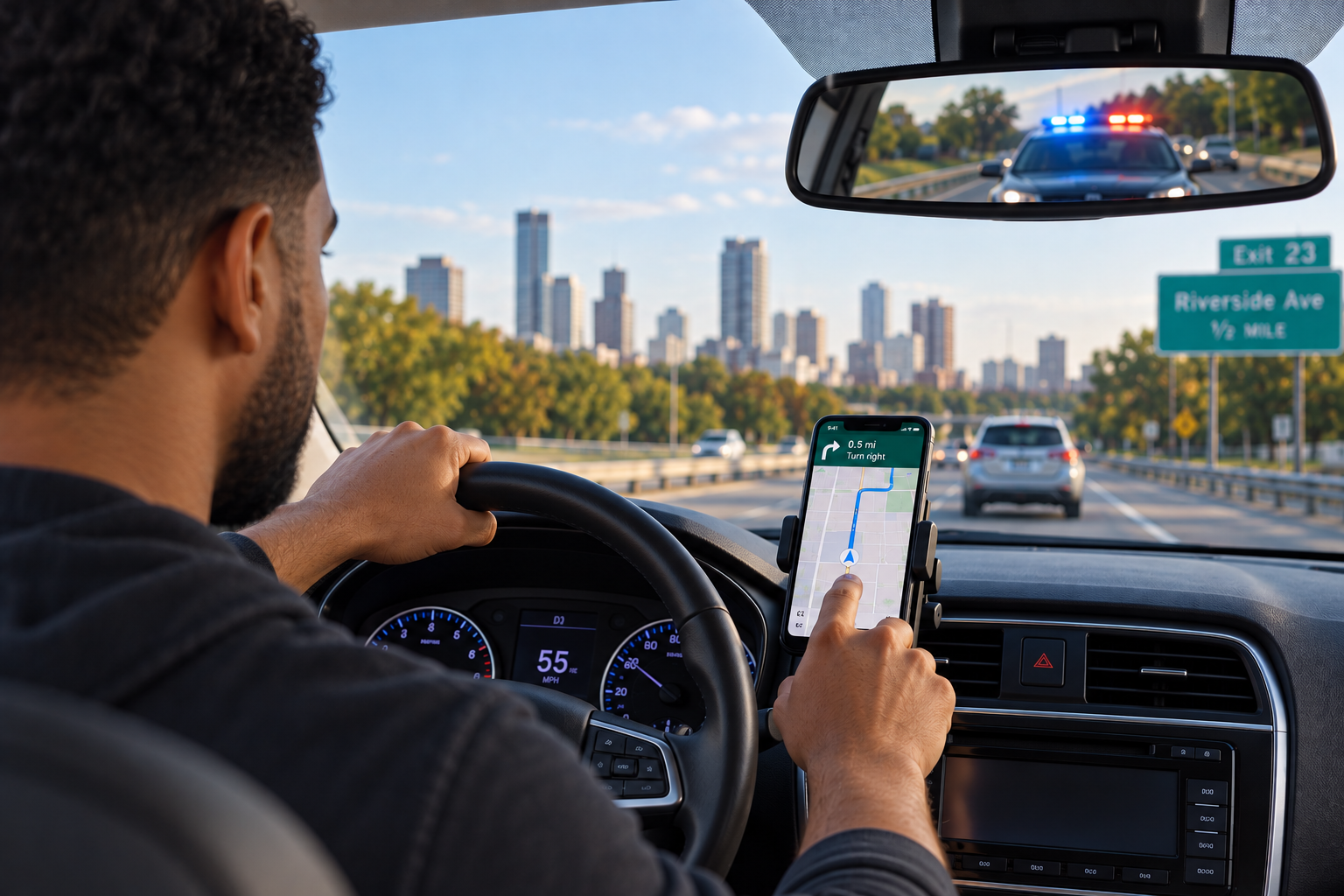
You are driving somewhere unfamiliar when your GPS tells you to take the next exit.
You pick up your phone for a few seconds to check the route.
Then you see flashing lights behind you.
Many drivers associate New York’s cell phone laws with texting, calling, or scrolling through social media. That can lead to a common question after receiving a ticket:
“I was only using my GPS. Does that still count?”
The answer may depend on exactly what you were doing with the device.
Using GPS Is Not Necessarily the Problem
Navigation has become a normal part of driving.
Drivers use phones for directions every day, and using a navigation application does not automatically mean that a driver is violating the law.
The important distinction is often how the device is being used.
There is a significant difference between glancing at directions displayed on a properly mounted phone and holding a phone in your hand while driving.
If you pick up the device to enter an address, change the route, search for a destination, or otherwise interact with it while the vehicle is moving, you may create a very different legal situation.
David Stanghellini
Mark and his firm represented me for a speeding violation. He and his firm were professional, kept me informed of the status of my case (it was deferred at least three times), and thorough in handling all aspects. In the end Mark and his team were able to get my violation dismissed without any points or conviction on my record. I am thankful for their diligence in representing me and fighting for me. Thank you!
“I Was Not Texting” May Not Be Enough
This is where drivers are often surprised.
New York’s distracted driving laws are not limited to traditional text messages.
Depending on the circumstances, prohibited use of a portable electronic device while driving can involve activities beyond sending a text.
That means telling an officer, “I wasn’t texting,” does not necessarily resolve the issue.
What matters is the conduct the officer claims to have observed and the particular violation charged.
Holding the Phone Can Make a Big Difference
Imagine two drivers using the same navigation application.
The first driver places the phone in a dashboard mount before leaving and follows the displayed directions.
The second driver is holding the phone while driving and looking down at the map.
Both drivers may be using GPS, but they are not necessarily using the device in the same way.
New York law places important restrictions on the use of handheld mobile phones and portable electronic devices while operating a motor vehicle.
This is why the details surrounding a traffic stop matter.
Where was the phone?
Were you holding it?
What were you doing with it?
Was the vehicle moving?
What did the officer actually observe?
Those facts may become important when evaluating the ticket.
What About Entering an Address at a Red Light?
This is another common situation.
You stop at a red light and realize the GPS is taking you to the wrong location. You pick up your phone and begin entering a different address.
Drivers sometimes assume that because the vehicle is temporarily stopped, using the phone is automatically permitted.
That assumption can create problems.
A vehicle stopped in traffic is not necessarily treated the same as a vehicle that has been safely pulled over and removed from the flow of traffic.
If you need to make significant changes to your navigation, the safer approach is to find an appropriate place to pull over before handling the device.
A GPS Ticket Can Be More Than an Inconvenience
A traffic ticket may seem like something you can simply pay and forget.
But pleading guilty to certain moving violations can have consequences beyond the fine itself.
Depending on the violation and your driving history, a conviction may result in points on your driving record, additional fees, possible insurance consequences, and greater problems if you already have other recent violations.
For someone who drives professionally, the consequences may be even more significant.
That is why it is worth understanding exactly what you were charged with before deciding how to respond.
What Should You Do If You Receive a Ticket?
Start by reading the ticket carefully.
Do not assume the charge is simply “using GPS.” The citation should identify the violation the officer alleges occurred.
Then think about what actually happened during the stop.
Was your phone mounted?
Were you holding it?
Were you entering information?
Were you simply looking at directions?
What did the officer say they observed?
Those details can help an attorney evaluate the circumstances surrounding the citation and explain what options may be available.
Every traffic case is different, and the appropriate response depends on the charge, the facts, and the driver’s record.
Your GPS Should Help You Reach Your Destination, Not Traffic Court
Phones have made navigation easier, but they have also created situations where drivers may not realize that the way they are interacting with a device could lead to a traffic violation.
If you need directions while driving, setting your destination before you leave and using a properly positioned device can help reduce distractions and avoid unnecessary problems on the road.
If you have already received a ticket involving a cell phone or portable electronic device, do not assume that paying it is your only option.
At MontanaroLaw, we help New York drivers fight traffic tickets and protect their driving privileges. If you received a cell phone or electronic device ticket, contact us today to discuss your case and learn how we may be able to help protect your license and driving record.
